
Get A Quote
Ottawa’s Fast & Reliable Solution to Big-Headed Ant Infestations
Big-headed ants usually start outdoors, but when their colonies grow, they often look for food or shelter closer to the home. Their workers split, regroup, and rebuild, making them difficult to eliminate completely without professional help.
Get ’Em Out offers Ottawa residents a dependable Big-Headed Ants Removal Service that targets both outdoor nests and potential entry points. We treat ants at every level of the colony and apply preventative measures so the infestation doesn’t resurface.
Give us a call and get professional help stopping big-headed ants at the source!
Danger & Damage of Big-Headed Ants
These ants are known for displacing soil and pushing up mounds around walkways or structural edges. Their tunneling can disturb garden beds and create uneven surfaces. It’s a common issue across Ottawa, and one that often requires Big-Headed Ants Removal before multiple colonies begin forming.
Peak Activity Seasons for Big-Headed Ants
In Ottawa, big-headed ants are most active from May to September but can survive indoors year-round in kitchens, pantries, and around heating vents. Watch for ant trails, frequent sightings, or minor bites. During this time, nests grow deeper and wider, so scheduling Big-Headed Ants Removal early in the season is ideal.
How to Identify Big-Headed Ants in Ottawa
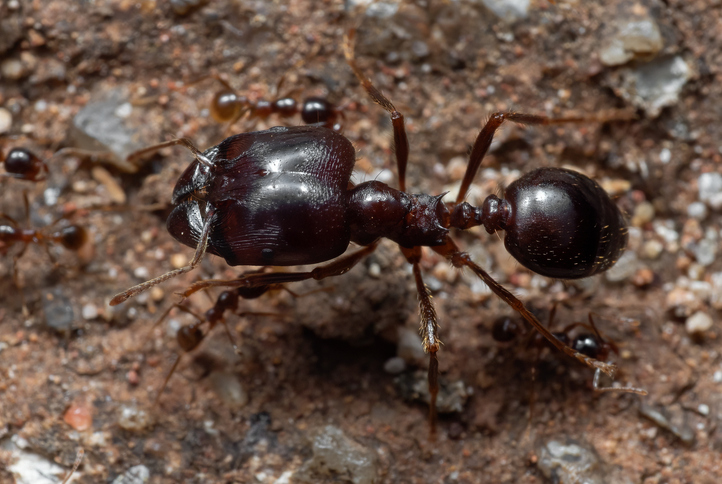
Big-headed ants get their name from the noticeably large heads of their worker ants. These reddish-brown ants are small but easy to identify once you spot the oversized head and strong jaws. They form organized trails and are often found near food, water, or entry points.
Indoor Ant Infestation Risks
Big-headed ants quietly move indoors through cracks, vents, and walls, forming satellite nests. Outdoors, they thrive in moist soil, decaying wood, and gardens. These habitats are common around Ottawa homes, which is why Big-Headed Ants Removal is frequently requested during warmer months.
Big-Headed Ants: Colony Life Cycle
Big-headed ants undergo complete metamorphosis, starting as eggs, then larvae cared for by workers, followed by pupae where they develop fully, and finally adults, including workers, soldiers, and queens, ready to forage, defend, and expand the colony.
Fascinating Facts About Big-Headed Ants
Big-headed ants behave differently from many of the common ant species, which is part of the reason they spread so easily. Here are a few surprising facts that highlight their unique nature:
- Colonies often include multiple queens, allowing them to expand far faster than single-queen ant species.
- They can survive long periods with minimal food, relying on stored nutrients during environmental stress.
- Big-headed ants collect and store seeds, acting almost like miniature granaries to support the colony through seasons of scarcity.
- When threatened, they retreat in coordinated waves rather than scattering randomly, showing a high level of colony organization.
- Their majors can carry objects many times their size, using their heads as leverage rather than their jaws alone.
Small but mighty, these ants are master invaders. They use their oversized heads to haul food, raid pantries with ease, outcompete other ant species, and build hidden colonies that can take over your home before you even notice.
What Our Customers Are Saying





Big-Headed Ant FAQ Guide
Big-headed ants can be confusing to deal with, especially when their colonies spread quickly. Here’s a simple guide from Get ’Em Out to help you understand what you’re seeing and what you can do next.
How can I identify big-headed ants?
They’re small ants with two worker sizes, and the larger workers have noticeably big, rounded heads. You’ll often see them moving in steady, well-organized trails outdoors.
Are they harmful to humans?
They aren’t dangerous, but they can bite if threatened. Most bites cause only mild irritation or itching.
How do they get into homes?
They enter through small cracks, gaps near doors or windows, or openings around plumbing. They’re drawn to moisture, loose soil, and accessible food.
How can I prevent an infestation?
Seal entry points, clean up food quickly, reduce moisture around the home, and keep soil and mulch away from the foundation when possible.
Do they cause property damage?
They can disturb soil, insulation, and small structural gaps, which may lead to minor issues if the colony grows large.
Are bites painful?
Not usually. Bites tend to be mild and temporary for most people.
Watch Us In Action
Protect Your Home from Big-Headed Ants | Get Expert Help Today at Get ‘Em Out!
When big-headed ants move into your soil, garden beds, or foundation lines, quick action is the best protection. Our Big-Headed Ants Removal solutions are trusted by families across Ottawa for their speed and reliability.
Call Get ’Em Out today and keep your home protected from persistent ant activity.
Contact Us:
OTTAWA / GATINEAU
23 Slate Street, Stittsville, Ontario, K2S 1Y7
Phone: 613-852-6423
Email: service@getemoutwildlife.com
Hours:
Monday – Friday: 8 AM – 8 PM
Saturday: 9 AM – 5 PM
Sunday: CLOSED